
Concrete Patio Installation in North Tonawanda, NY
North Tonawanda Concrete Services designs and installs concrete patios for homeowners throughout North Tonawanda and the wider Western New York area. Whether you want a clean functional slab or a decorative stamped finish, we build patios that last and look great doing it.
25+
Years of Experience
400+
Jobs Done
4.9/5
Average Customer Rating
What a Concrete Patio Adds to Your Home and Your Life
A concrete patio is one of the most practical and rewarding improvements a homeowner can add to their property. It takes an underused backyard and turns it into a defined, functional outdoor space that works in every season and requires almost no maintenance to keep looking good. For families in North Tonawanda who want a place to gather, grill, entertain, or simply sit outside without dealing with mud, uneven ground, or grass that needs constant attention, a concrete patio is the most straightforward solution available.
Beyond everyday usability, a well-installed concrete patio adds genuine value to your home. Outdoor living space is consistently cited as one of the features buyers look for, and a cleanly finished concrete patio makes a strong impression compared to a bare or overgrown backyard. Whether you plan to stay in your home for decades or eventually sell, the investment in a concrete patio pays off in both quality of life and property value.
Concrete also gives you more design flexibility than most homeowners expect. A standard smooth or broom-finished slab is clean, durable, and affordable. A stamped concrete surface adds texture, pattern, and color that can mimic natural stone, brick, or slate at a fraction of the cost of those materials. Whatever direction you choose, the result is a permanent outdoor surface built to handle everything a Western New York backyard can throw at it.
When the Time Is Right for a New Patio
The most obvious candidate for a concrete patio is a homeowner whose backyard has no usable surface at all. Grass and bare dirt simply do not function as outdoor living space in any practical sense, especially through the wet springs and variable summers that North Tonawanda regularly sees. If your backyard becomes muddy after rain, has no defined area for furniture or a grill, and gets used mainly because there is nowhere comfortable to be, a concrete patio is the solution that changes all of that immediately.
Homeowners with an existing patio that is cracked, uneven, or badly deteriorated are also strong candidates for a replacement. An old patio with widespread cracking, sections that have heaved or settled unevenly, or a surface that has scaled and deteriorated past the point of patching is not just an eyesore. It is a surface that collects water in low spots, creates tripping hazards, and makes the backyard less usable than having no patio at all.
Choosing not to address a deteriorating patio also has consequences beyond appearance. Water that pools on an uneven surface can drain toward the house foundation rather than away from it, contributing to moisture problems in basements and crawl spaces over time. The longer a damaged patio is left in place, the more work may be required to properly prepare the base for a replacement. Acting sooner rather than later is almost always the more cost-effective choice.
Our Patio Installation Process, Step by Step
Every concrete patio we install begins with careful planning and proper site preparation, because what goes beneath the surface is just as important as what goes on top of it. We start by excavating the patio area to the required depth, removing existing grass, soil, and any old material that needs to come out before a proper base can be established. The depth of excavation depends on soil conditions and the intended use of the patio.
Once excavated, we compact the sub-base and add a layer of gravel where conditions require it, creating a stable, well-draining foundation that prevents the slab from shifting or settling unevenly over time. This base preparation step is where a lot of cheaper installations cut corners, and it is precisely where problems originate in patios that start cracking or sinking within a few years of being poured.
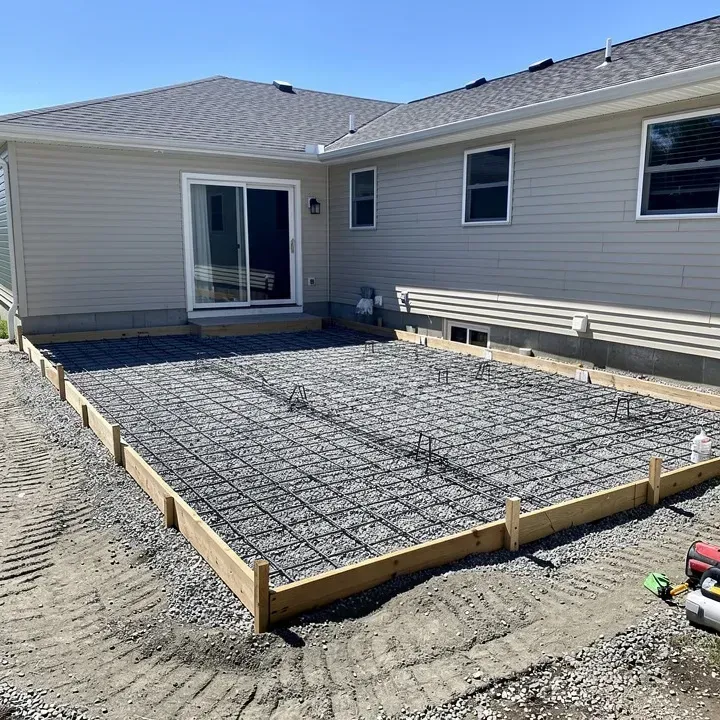
We then set the forms to define the exact shape, dimensions, and elevation of the patio, making sure the surface will slope correctly away from the house so that water drains away from the foundation rather than toward it. Reinforcement is placed before the pour to give the slab the strength it needs to resist cracking under load and through seasonal freeze-thaw movement. We then pour the concrete, finish it to the specified surface texture, and cut control joints at the appropriate intervals to manage any future movement in the slab. The surface is cured properly before any use, ensuring it reaches full strength before being put to work.
What Determines the Cost of a Concrete Patio
The cost of a concrete patio installation is influenced by several specific factors that vary from one project to the next. The total square footage of the patio is the most straightforward cost driver, as it determines the amount of concrete, forming, and finishing work involved. Larger patios cost more in materials and labor, but the cost per square foot often becomes more favorable as the size increases.
The amount of excavation and base preparation required has a significant impact on overall cost. A backyard that sits at a relatively consistent grade and has good soil conditions requires less preparation work than a site with significant slope, poor drainage, or soil that needs to be built up or stabilized before a slab can be poured. Sites that are difficult to access with equipment can also add to the labor cost.
Whether the patio includes any decorative elements is another major cost factor. A standard broom-finished gray slab is the most affordable option and still produces a clean, durable result. Stamped concrete with custom patterns and integral color adds to the cost but produces a significantly more visually impressive surface. Exposed aggregate, borders, and multi-level designs all influence the final price as well. We walk through all of these options during the estimate visit and give you a clear picture of what each choice adds to the overall investment so you can make an informed decision that fits your budget.
Frequently Asked Questions
Can you add steps or a walkway connecting the patio to the rest of the yard?
Absolutely. Steps, walkways, and connecting paths are common additions to patio projects and can be incorporated into the same installation. Adding these elements during the original project is always more efficient and cost-effective than coming back to do them separately later, since the forms, equipment, and concrete are already on site. If you have ideas about how you want the patio to connect to other areas of your yard or to a side entrance of the home, bring them up during the estimate visit and we will factor them into the plan from the start.
What is the difference between a standard concrete patio and a stamped concrete patio?
A standard concrete patio uses a smooth or broom-finished surface in natural gray concrete. It is clean, durable, and the most cost-effective option for homeowners who want a functional outdoor surface without decorative elements. A stamped concrete patio uses the same structural concrete base but adds texture, pattern, and often color to the surface before it sets, creating a finished look that can closely resemble natural stone, brick, slate, or other materials.
Stamped concrete costs more than a standard finish due to the additional materials and labor involved, but it delivers a significantly more visually impressive result that can genuinely transform the look of a backyard. Both options are equally durable when properly installed. The right choice depends on your budget and how important the visual character of the patio is to you. We are happy to show you examples of both during the estimate visit so you can make the comparison in person.
How long before I can use the patio after it is poured?
Light foot traffic is generally safe after 24 to 48 hours, though we recommend waiting the full 48 hours to be safe. For placing furniture, planters, or a grill on the surface, we suggest waiting at least seven days to allow the concrete to reach adequate strength. Heavy items like a hot tub should wait the full 28-day curing period before being placed on the slab. We will give you clear guidance specific to your project before we leave so you know exactly what to expect during the curing process.
How thick should a concrete patio be?
For a standard residential patio that will see foot traffic and normal outdoor furniture, a slab thickness of four inches is the typical minimum. If the patio will need to support heavier loads such as a hot tub, a large built-in grill station, or any kind of outbuilding, we increase the thickness accordingly and adjust the reinforcement to match. We assess the intended use of the patio during the estimate visit and recommend the appropriate thickness for your specific situation so the slab is built to handle what you plan to put on it.
Let's Talk About Your Concrete Project!
Whether you are dealing with a cracked driveway that has been bothering you for years, planning a new patio for the backyard, or facing a foundation issue that needs professional attention, North Tonawanda Concrete Services is ready to help. We offer free on-site estimates with no obligation, clear and honest pricing, and the kind of quality workmanship that comes from 25 years of doing this work right here in Western New York.
Do not wait for a small problem to turn into an expensive one. Give us a call or send us a message today and we will set up a time to come out, take a look at your project, and give you a written estimate you can count on. We are local, we are experienced, and we are ready to get to work for you.

Contact
(716) 403-4926
Mon–Sun: 7am–7pm
North Tonawanda, NY
About Us
North Tonawanda Concrete Services is a locally owned concrete contracting business with over 25 years of experience serving homeowners throughout North Tonawanda and the wider Western New York region. We handle residential concrete projects of all sizes, from smaller repairs and improvements to full installations and new construction work. Our service area covers North Tonawanda and the surrounding communities across Niagara and Erie County. If you have a concrete project that needs to be done right, we would love to hear from you.
© Copyright 2026 North Tonawanda Concrete Services. All rights reserved.
© Copyright 2026 North Tonawanda Concrete Services.
All rights reserved.