
Stamped Concrete Installation in North Tonawanda, NY
North Tonawanda Concrete Services designs and installs stamped concrete surfaces for homeowners throughout North Tonawanda and the wider Western New York area. From patios and driveways to pool decks and walkways, we create decorative concrete finishes that combine lasting durability with genuine visual impact.
25+
Years of Experience
400+
Jobs Done
4.9/5
Average Customer Rating
Why Stamped Concrete Has Become the Go-To Decorative Surface for Homeowners
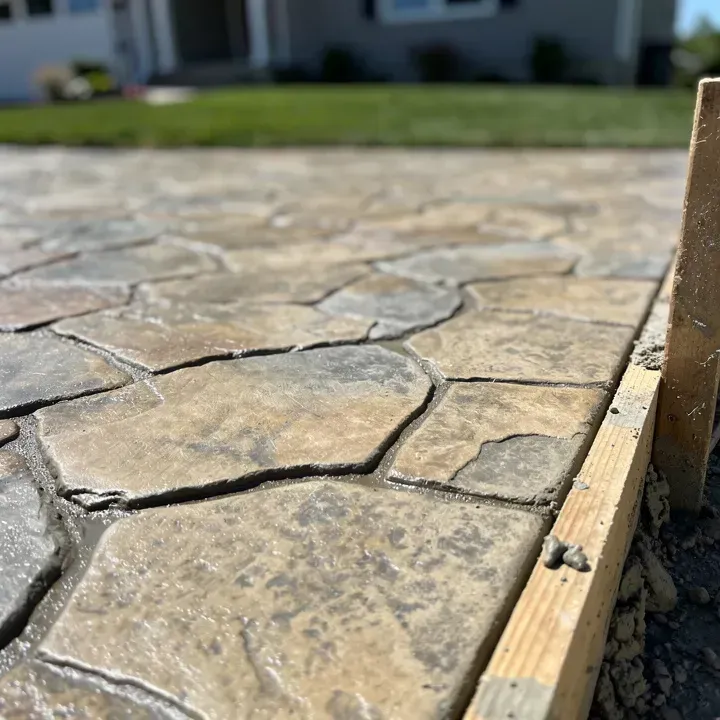
Stamped concrete is a decorative finishing technique applied to freshly poured concrete that creates the appearance of natural stone, brick, slate, cobblestone, or a wide range of other textures and patterns. Before the concrete sets, specialized stamping tools are pressed into the surface to imprint a consistent pattern across the entire area. Color is incorporated through integral pigments added to the concrete mix, surface-applied color hardeners, or a combination of both, creating depth and variation that closely mimics the look of the material being replicated.
The result is a surface that delivers the visual appeal of premium materials like natural flagstone or clay brick at a significantly lower cost, with none of the ongoing maintenance challenges those materials bring. Natural stone shifts and settles over time as the base beneath it moves. Individual pavers can heave, crack, and become displaced, creating uneven surfaces and tripping hazards. Stamped concrete, by contrast, is a single monolithic slab that moves as one unit, holds its pattern indefinitely, and requires nothing more than periodic sealing to maintain its appearance and protect the surface.
For homeowners in North Tonawanda who want outdoor surfaces that make a genuine visual statement without committing to the expense and complexity of natural stone or the ongoing upkeep of pavers, stamped concrete offers the ideal middle ground. It is permanent, durable, customizable, and built to handle the full range of conditions that Western New York weather delivers year after year.
Where Stamped Concrete Works and Who Benefits Most
Stamped concrete is a versatile finishing option that works across a wide range of residential applications. Patios are the most common application, and for good reason. A stamped concrete patio immediately elevates the visual character of a backyard in a way that a standard gray slab simply cannot match. The combination of pattern, color, and texture turns a functional surface into a deliberate design feature that ties the outdoor space to the overall aesthetic of the home.
Driveways are another application where stamped concrete makes a dramatic difference. A stamped driveway sets a home apart from every other house on the street and creates a strong first impression before anyone has even reached the front door. Stamped concrete is equally effective on pool decks, where the added texture of the stamped pattern provides slip resistance while the decorative finish elevates the entire pool area. Front entry walkways, side paths, and connecting walkways between outdoor areas are also excellent candidates for stamped concrete, particularly when they are designed to flow visually from a stamped patio or driveway nearby.
Homeowners who will benefit most from stamped concrete are those who want a premium-looking outdoor surface, are interested in adding visual character and design intentionality to their property, and want a result that holds up for decades without the ongoing maintenance burden that comes with natural stone or individual pavers. It is also a particularly strong choice for homeowners who are planning to sell in the coming years, as stamped concrete consistently makes a strong impression during showings and adds genuine perceived value to the property.
The Stamped Concrete Installation Process, Step by Step
Stamped concrete requires more precision and timing than a standard concrete installation, and getting it right depends on experience, preparation, and working efficiently once the pour begins. The window for stamping freshly poured concrete is relatively narrow, which means every step leading up to it needs to be planned and executed carefully so the surface is in exactly the right condition when the stamps go down.
We begin with full site preparation, including excavation, sub-base compaction, gravel placement where required, and forming the exact shape and dimensions of the surface. Reinforcement is placed throughout the slab to give it the structural integrity it needs to perform correctly over time. Color hardener is broadcast across the surface of the freshly poured concrete and worked in to achieve the base color and surface density required for the pattern. A release agent is then applied, which serves both as a bond breaker to prevent the stamps from sticking to the surface and as a secondary color accent that settles into the recesses of the pattern and creates the natural tonal variation that gives stamped concrete its depth and realism.
The stamping itself is carried out systematically across the entire surface while the concrete is at the optimal consistency for accepting the impression cleanly and completely. This stage requires careful coordination to ensure the pattern aligns correctly from one stamp to the next and that the pressure applied is consistent across the full area. Once stamping is complete and the concrete has cured sufficiently, the surface is cleaned, and a quality concrete sealer is applied to lock in the color, protect the surface from moisture and UV exposure, and bring out the full visual depth of the finished pattern. The sealer also gives stamped concrete that characteristic slight sheen that makes the color and texture read so well in natural light.
Why Stamped Concrete Costs More Than Standard Concrete and Why It Is Worth It
Stamped concrete costs more than a standard concrete installation of the same size, and understanding why helps homeowners evaluate the investment accurately. The additional cost comes from the extra materials involved, including color hardeners, release agents, and sealer, as well as the additional labor required to apply color, execute the stamping process correctly, and seal the finished surface. The timing sensitivity of the stamping window also means that stamped concrete projects require more crew coordination and focused attention than a standard pour and finish.
The size of the area being stamped is the primary driver of overall cost, as it determines how much concrete, color material, and labor the project requires. Pattern complexity also plays a role. A straightforward large-format stone pattern is more efficient to stamp than an intricate cobblestone or multi-directional design that requires more careful alignment and additional stamping time. Custom borders, multiple colors, and accent details all add to the cost as well but contribute significantly to the finished visual result.
The specific application also influences pricing. A stamped pool deck has additional complexity around the pool perimeter and coping that a standard patio does not. A stamped driveway involves a larger surface area and may require heavier reinforcement than a patio of the same square footage. It is also worth noting that the long-term cost comparison between stamped concrete and natural stone or pavers almost always favors stamped concrete substantially, when installation cost, ongoing maintenance, and longevity are all factored in together. We provide a detailed written estimate for every stamped concrete project so you have a clear and complete picture of the investment before any work begins.
Frequently Asked Questions
How long does stamped concrete last compared to pavers or natural stone?
A properly installed and maintained stamped concrete surface will last 25 years or more, which is comparable to or better than most paver installations and on par with natural stone. The key advantage stamped concrete has over pavers is that it is a single monolithic slab rather than a collection of individual units sitting on a sand or gravel base. Individual pavers shift, settle, and become displaced over time, requiring periodic releveling and replacement of damaged units. Stamped concrete moves as one unit, holds its pattern and color indefinitely with proper sealing, and does not develop the uneven surface that paver installations commonly experience over years of freeze-thaw cycles in a Western New York climate.
Does stamped concrete get slippery when wet?
This is one of the most common concerns homeowners raise about stamped concrete, and it is a legitimate one that depends entirely on how the surface is finished. A stamped surface with a pronounced texture, such as a natural stone or slate pattern with good relief depth, provides solid traction even when wet. Smoother patterns with less surface relief can become slippery when wet, particularly around a pool. We always discuss the intended use and location of the surface during the estimate visit and recommend patterns and finishes that provide appropriate traction for the application. For pool decks and other areas where wet feet are a regular factor, we select stamping patterns specifically for their slip-resistant characteristics and can add a non-slip additive to the sealer for additional grip where needed.
Can stamped concrete be repaired if it cracks or chips?
Yes, stamped concrete can be repaired, though the success of the repair in terms of visual match depends on the age of the surface, the specific colors used, and how well the repair is executed. Small cracks can be filled with a flexible concrete crack filler that prevents water infiltration and further widening without requiring full section replacement. Larger damaged areas may require cutting out and replacing a section of the slab, which is a more involved process but entirely achievable when done by an experienced contractor.
The honest reality is that an exact color match on an older stamped surface is difficult to guarantee, as the original color will have aged and the sealer will have gone through multiple cycles. That said, a skilled repair done with care and followed by a fresh coat of sealer across the full surface can produce a result that blends well and extends the life of the installation significantly. We assess any damaged stamped concrete honestly and give you a realistic picture of what a repair will achieve before any work begins.
How do I maintain stamped concrete and keep it looking its best?
The most important maintenance step for stamped concrete is regular sealing. We apply an initial sealer as part of the installation, and we recommend resealing the surface every two to three years depending on the level of traffic and sun exposure it receives. Resealing restores the color depth and sheen of the surface, refreshes the protective layer against moisture and UV fading, and keeps the finished appearance close to how it looked when it was first installed.
Beyond sealing, stamped concrete requires very little ongoing maintenance. Keep the surface reasonably clean by rinsing off debris and organic material that can stain the surface if left to sit, particularly under trees or near garden beds. Avoid using chemical deicing salts on stamped concrete surfaces, especially during the first winter after installation. Sand provides adequate traction without the surface damage that salt causes. Address any small cracks promptly if they develop, as early attention keeps them from widening through freeze-thaw cycles and keeps the repair straightforward.
Let's Talk About Your Concrete Project!
Whether you are dealing with a cracked driveway that has been bothering you for years, planning a new patio for the backyard, or facing a foundation issue that needs professional attention, North Tonawanda Concrete Services is ready to help. We offer free on-site estimates with no obligation, clear and honest pricing, and the kind of quality workmanship that comes from 25 years of doing this work right here in Western New York.
Do not wait for a small problem to turn into an expensive one. Give us a call or send us a message today and we will set up a time to come out, take a look at your project, and give you a written estimate you can count on. We are local, we are experienced, and we are ready to get to work for you.

Contact
(716) 403-4926
Mon–Sun: 7am–7pm
North Tonawanda, NY
About Us
North Tonawanda Concrete Services is a locally owned concrete contracting business with over 25 years of experience serving homeowners throughout North Tonawanda and the wider Western New York region. We handle residential concrete projects of all sizes, from smaller repairs and improvements to full installations and new construction work. Our service area covers North Tonawanda and the surrounding communities across Niagara and Erie County. If you have a concrete project that needs to be done right, we would love to hear from you.
© Copyright 2026 North Tonawanda Concrete Services. All rights reserved.
© Copyright 2026 North Tonawanda Concrete Services.
All rights reserved.